The Silk Road is generally understood as having originated in the Western Han dynasty. More precisely, the land Silk Road began to take shape during the reign of Emperor Wu of Han, after Zhang Qian was sent westward to the Western Regions in the 2nd century BCE.
It was not a single road built in one year. It was a long-distance network of routes, diplomatic missions, oasis towns, military corridors, merchants, and cultural exchanges that gradually connected China with Central Asia, West Asia, and the Mediterranean world.
Why is the Silk Road linked to the Western Han dynasty?
The Western Han dynasty is linked to the beginning of the Silk Road because it was the first Chinese imperial state to actively connect diplomacy, frontier defense, trade, and western routes into a long-term strategy.
Before the Han dynasty, goods and people had already moved across parts of the Eurasian steppe and Central Asia. Nomadic groups, local traders, and regional powers exchanged objects and ideas. However, these contacts were scattered and unstable. They were not yet the organized, historically visible network later called the Silk Road.
During the reign of Emperor Wu of Han, the Xiongnu controlled important northern and western routes and placed pressure on Han frontiers. To find allies against the Xiongnu, Emperor Wu sent Zhang Qian westward. This mission was diplomatic and strategic at first, but it opened Han China’s knowledge of Central Asia and helped create the conditions for long-distance exchange.
Why was Zhang Qian important?
Zhang Qian is often remembered as the great pioneer of the Silk Road. Around 138 BCE, Emperor Wu sent him from Chang'an toward the Western Regions to seek an alliance with the Yuezhi. Zhang Qian was captured by the Xiongnu and detained for years, but he eventually reached western lands and returned to Han China with important information.
His mission did not fully achieve its original military purpose. Yet it transformed Han knowledge of the wider world. Zhang Qian reported on places such as Dayuan, Kangju, the Yuezhi, and Daxia. He also brought information about horses, grapes, alfalfa, and trade possibilities beyond the deserts and mountains.
Later Chinese historians described his journey as a breakthrough into previously unknown territory. This is why Zhang Qian is not simply seen as a traveler. He became a symbol of opening routes, expanding knowledge, and connecting China with Central Asia.

What role did Emperor Wu of Han play?
If Zhang Qian was the pathfinder, Emperor Wu was the ruler whose policies made the route historically significant. The Western Han state did not only send envoys. It also expanded its influence into the Hexi Corridor, the narrow but vital passage through today’s Gansu region.
The Hexi Corridor connected the Chinese heartland with Dunhuang and the gateway to the Western Regions. Once the Han gained control of this corridor, it established commanderies such as Wuwei, Zhangye, Jiuquan, and Dunhuang. These administrative centers helped protect movement, support settlements, and maintain communication.
Without the Hexi Corridor, the route from Chang'an toward Central Asia would have remained vulnerable. With Han military and administrative support, the path became more stable for envoys, merchants, horses, textiles, and ideas.
Why is it called the Silk Road?
The name “Silk Road” was not used by the Han dynasty itself. It was popularized in the 19th century by the German geographer Ferdinand von Richthofen, who used it to describe routes connecting China with Central Asia and the West, where silk was one of the most famous trade goods.
Silk was highly valued in the ancient world, but the route was never only about silk. Horses, jade, spices, glassware, precious metals, medicines, wool textiles, religious texts, artistic motifs, and technologies also moved across the network.
For this reason, the Silk Road should be understood as a cultural and economic system, not merely a trade route for one luxury product.
Where did the land Silk Road begin and end?
The traditional land Silk Road is usually described as beginning in Chang'an, today’s Xi'an, the capital of the Western Han and later the Tang dynasty. From Chang'an, routes moved west through the Guanzhong region and the Hexi Corridor, reaching Dunhuang before entering the Western Regions through passes such as Yumen Pass and Yang Pass.
Beyond Dunhuang, the routes divided around deserts, mountains, and oasis cities in today’s Xinjiang. They continued toward Central Asia, West Asia, and eventually the Mediterranean world. Different travelers used different branches depending on politics, climate, war, trade needs, and local alliances.
How did later dynasties develop the Silk Road?
The Western Han dynasty laid the foundation, but the Silk Road continued to change over many centuries. During the Eastern Han dynasty, figures such as Ban Chao and Ban Yong helped restore and maintain contact with the Western Regions. These efforts kept the route active during periods of political pressure and frontier conflict.
The Tang dynasty became one of the most prosperous periods of Silk Road exchange. Tang Chang'an was a cosmopolitan capital where merchants, monks, envoys, musicians, and students from many regions gathered. Sogdian traders, Buddhist monks, Central Asian performers, and foreign religious communities all contributed to the city’s international character.
This means the best historical answer is balanced: the Silk Road began under the Han, but it flourished through the work of later dynasties and many peoples along the route.
Was the Maritime Silk Road also established by the Han dynasty?
The term “Silk Road” can refer to both land and sea routes. The land Silk Road is usually traced to the Western Han dynasty and Zhang Qian’s missions. The Maritime Silk Road has a more gradual history.
Coastal and sea exchanges existed in early periods, including during the Qin and Han eras. However, maritime trade became especially important in later dynasties, particularly from the Tang and Song periods onward. Ports such as Guangzhou and Quanzhou became major centers of overseas exchange.
Therefore, when people ask which dynasty established the Silk Road, they usually mean the land Silk Road, and the answer is the Western Han dynasty. The Maritime Silk Road developed across a longer and more complex timeline.
Timeline of Silk Road development
| Period | Key Development | Historical Meaning |
|---|---|---|
| Before Han | Regional exchanges existed across steppe and oasis zones | Early movement of goods and ideas, but not yet a stable Silk Road system |
| Western Han | Zhang Qian was sent west; Emperor Wu expanded Han influence | The land Silk Road began to take shape |
| Western Han frontier policy | Han control of the Hexi Corridor and establishment of commanderies | Created a more secure route from Chang'an to the Western Regions |
| Eastern Han | Ban Chao and Ban Yong maintained contact with the Western Regions | Continued diplomatic and strategic use of the route |
| Tang dynasty | Chang'an became a major cosmopolitan center | The Silk Road reached one of its great cultural high points |
| Song and Yuan periods | Maritime trade expanded greatly | Sea routes became increasingly important for long-distance exchange |
Why was the Silk Road historically important?
The Silk Road changed far more than trade. It helped move goods, but it also moved religions, technologies, artistic styles, plants, animals, languages, and ideas.
Buddhism entered China through routes connected with Central Asia and the Western Regions, leaving a deep mark on Chinese art, architecture, literature, and philosophy. Sites such as Dunhuang and other cave temples reflect this long history of cultural exchange.
The Silk Road also expanded how ancient Chinese states understood the world. Before Zhang Qian, Han knowledge of western lands was limited. After his missions and later frontier policies, China had a clearer view of Central Asia, oasis states, nomadic powers, and distant civilizations.
Why should we not say one person “built” the Silk Road?
It is common to say that Zhang Qian opened the Silk Road, and this is reasonable as a short expression. But it is not accurate to say that one person built it alone.
Zhang Qian provided the breakthrough. Emperor Wu’s government supplied state policy, military protection, and frontier administration. Merchants, envoys, monks, translators, craftsmen, and local peoples across Central Asia kept the network alive. The Silk Road was a shared historical creation, shaped by many cultures over many centuries.
Cultural Symbol Examples Inspired by the Silk Road
Chinese jewelry should not be treated as a promise of luck or as a way to control the future. In this context, Chinese-style jewelry is better understood as symbolic language.
Because the Silk Road is connected with travel, cultural exchange, Dunhuang art, protection, and long-distance connection, the following pieces can be read as cultural symbol examples rather than strong product recommendations.

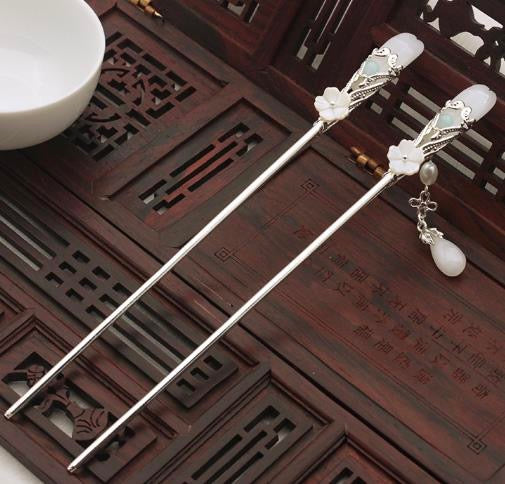
Dunhuang Inspired Hairpin
Dunhuang is one of the most meaningful cultural sites connected with Silk Road art and Buddhist exchange. This piece can echo that heritage through color and traditional craft.
View Symbol Piece
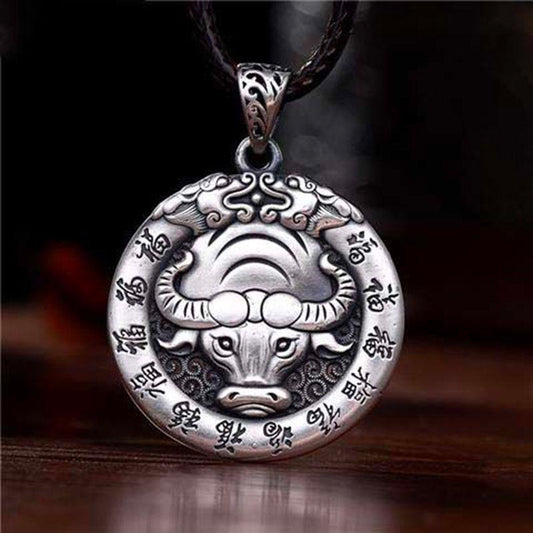
Qilin Necklace with Ancient Coin Pendant
The ancient coin motif can suggest exchange and historical continuity, while the qilin is a traditional auspicious creature. Here, it works as a cultural symbol rather than a promise of fortune.
View Symbol Piece
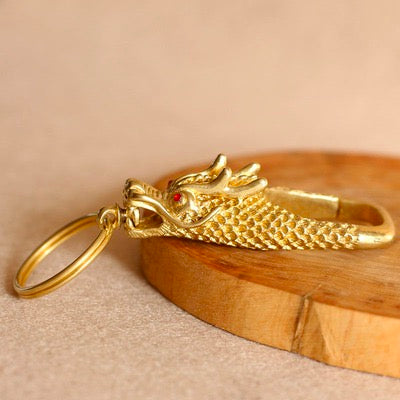
Hetian Jade Koi Fish Peace Lock Pendant
The peace lock motif can represent safe travel and protection, while jade has long been valued in Chinese culture. It can gently echo the idea of long journeys and cultural memory.
View Symbol PieceThese pieces are included as Chinese Jewelry Symbols and cultural examples. They should not be read as a promise of wealth, luck, protection, or historical authenticity.
Final thoughts
The most accurate answer is that the land Silk Road originated in the Western Han dynasty. Emperor Wu’s reign and Zhang Qian’s missions to the Western Regions were the key starting points. Han control of the Hexi Corridor then gave the route the security and structure it needed to become a long-distance channel.
At the same time, the Silk Road was not a single road built once and finished. It was a living network that later dynasties, especially the Eastern Han and Tang, continued to develop. Its importance lies not only in silk or trade, but in the long history of exchange between China, Central Asia, West Asia, and the wider world.
FAQ
Which dynasty established the Silk Road?
The land Silk Road is generally considered to have been established in the Western Han dynasty, especially during the reign of Emperor Wu of Han.
Who opened the Silk Road?
Zhang Qian is usually credited as the key pioneer because his missions to the Western Regions opened Han China’s knowledge of Central Asia and western routes.
Did the Tang dynasty establish the Silk Road?
No. The Tang dynasty did not establish the Silk Road, but it made the route highly prosperous. Tang Chang'an became one of the most cosmopolitan cities in the world at that time.
Why was the Hexi Corridor important?
The Hexi Corridor connected the Chinese heartland with Dunhuang and the Western Regions. Han control of this passage made long-distance travel and exchange much more stable.
Was the Silk Road only one road?
No. It was a network of routes, including branches through deserts, mountains, oasis cities, and later maritime routes across the seas.
References
- UNESCO: About the Silk Roads
- UNESCO World Heritage Centre: Silk Roads, the Routes Network of Chang'an-Tianshan Corridor
- Encyclopaedia Britannica: Silk Road
- China Cultural Center in Paris: Silk Road
- People's Daily Overseas Edition: Silk Road Policies of Emperor Wu and Emperor Yongle
- Image source: Silk Route Map via Wikimedia Commons