Chinese Cloisonne at a Glance
| Common English names | Chinese cloisonne, Beijing cloisonne, Jingtai blue |
|---|---|
| Historical evidence | Examples are documented from the Yuan period; the craft developed strongly under the Ming and Qing courts. |
| Main materials | Copper body, fine metal wire, colored enamel, solder, gilding metal |
| Recognizable features | Metal outlines, cell-like color fields, blue or turquoise grounds, dense floral and auspicious ornament |
| Typical objects | Vases, censers, bowls, boxes, screens, ritual objects, decorative vessels, and jewelry |
| Core cultural value | Technical mastery, courtly design, symbolic ornament, and the continuity of Beijing craft knowledge |

What Does "Jingtailan" Mean?
Jingtailan literally means "Jingtai blue." Jingtai was the reign title of a mid-fifteenth-century Ming emperor, while lan means blue. Rich cobalt and turquoise grounds became so closely associated with the craft that the reign name entered popular usage. Yet the name should not be read as proof that cloisonne was invented during the Jingtai reign. Surviving objects and museum scholarship place copper-body cloisonne in China earlier, including the Yuan period. The Jingtai era is better understood as a point of exceptional prestige and refinement.
Origins and Historical Development
Enameling is not unique to China. Related techniques circulated across Eurasia through diplomatic exchange, trade, and the movement of artisans. Chinese makers adapted these ideas to local bronze casting, soldering, surface ornament, and court taste. The result was not a simple copy of a foreign method but a distinct Chinese metal-enamel tradition.

How Is Chinese Cloisonne Made?
Traditional production is a sequence of specialist tasks. Large workshops may divide the work among body makers, wire workers, enamel fillers, kiln workers, polishers, and gilders. Small pieces still require several firings because enamel contracts as it melts.
How Can You Recognize Cloisonne?
Look first for the metal lines. In genuine wire-inlaid cloisonne, outlines are structural partitions rather than painted strokes. They rise from the metal body, organize every color area, and usually remain visible after polishing. On rounded vessels, the wire network must follow the curve without lifting or breaking.
- Cellular outlines: fine metal lines surround individual colors.
- Dense ornament: open ground is often filled with scrolls, florets, dots, or geometric borders.
- Jewel-like color: the fired enamel may be opaque or slightly translucent, with subtle variations from firing.
- Metal-and-glass weight: a copper-bodied vessel is usually heavier and more rigid than painted ceramic.
- Handmade irregularity: tiny differences in wire curves and enamel fill can show handwork, but defects alone do not prove age or authenticity.

Patterns, Symbolism, and Cultural Meaning
Cloisonne surfaces often combine several motifs in a single visual program. Lotus scrolls can evoke purity and Buddhist visual culture; peonies commonly suggest rank, beauty, and prosperity; chrysanthemums are associated with autumn and cultivated longevity; bats can express good fortune through a Chinese-language pun; dragons and phoenixes can signal authority, cosmic order, or auspicious union depending on context.
Clouds, waves, key-fret borders, ruyi-shaped heads, and interlocking geometric bands provide rhythm and structure. Blue grounds may suggest sky, water, precious minerals, or simply a highly valued color field. Gold outlines intensify the contrast and make the pattern legible from a distance.
How Did Cloisonne Change Across Dynasties and Uses?
Ming works are often admired for strong outlines, saturated blue grounds, and robust lotus or animal designs. Qing palace production introduced a wider palette, refined wire drawing, technically ambitious shapes, and combinations with other decorative arts. Ritual vessels could deliberately recall ancient bronze forms, while scholar's objects and furnishings suited court interiors.
Outside the court, commercial production adapted cloisonne to export tastes and domestic decoration. Modern objects range from monumental city sculptures to compact jewelry. Regional workshops and individual makers vary in palette and finish, so "Chinese cloisonne" is best understood as a family of practices rather than a single unchanging style.
Cloisonne vs. Related Enamel and Ceramic Techniques
Cloisonne enamel
Wire is attached to a metal body to create cells before colored enamel is added. The wire remains part of the visible design.
Champleve enamel
Cells are carved, cast, or recessed directly into the metal surface. Separate wires do not normally create the compartments.
Painted enamel
Enamel colors are painted onto a prepared metal surface like an image. Fine linear details may be painted rather than built from wire.
Porcelain overglaze decoration
Colored enamels are fired onto ceramic, not a copper body. The material structure and firing system differ even when the palette looks similar.
Modern Use, Care, and Living Heritage
Today the craft survives through state and private workshops, master artisans, vocational education, museums, and independent studios. Designers use cloisonne on jewelry, clocks, architectural panels, souvenirs, and limited-edition art objects. Digital drawing can assist planning, but successful wire work, enamel control, firing, and polishing still depend on trained hands.
To care for a cloisonne object, avoid dropping it, rapid temperature changes, abrasive polishing compounds, and prolonged exposure to strong chemicals. Dust with a soft cloth or brush. If enamel is cracked or metal fittings are loose, consult a conservator rather than applying household glue. Age claims should be supported by provenance, construction study, and expert examination - not by color or surface wear alone.

Craft Connections: Enamel and Cloisonne Jewelry
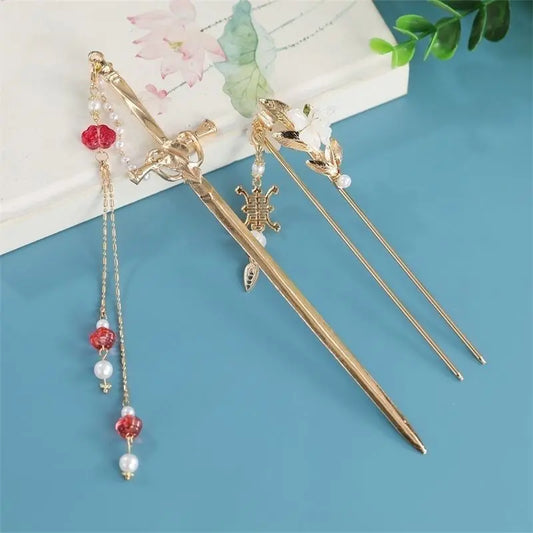
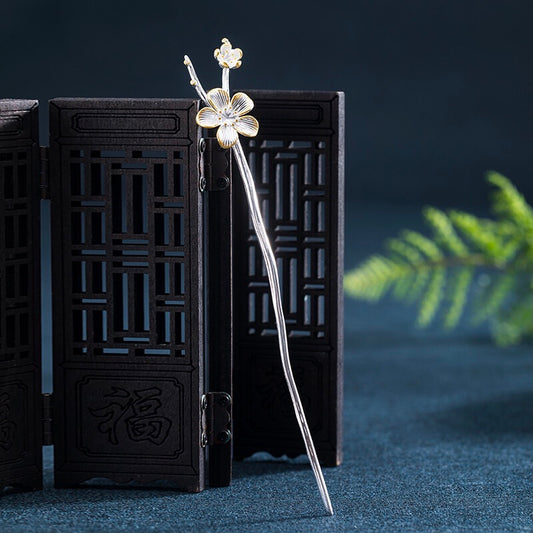
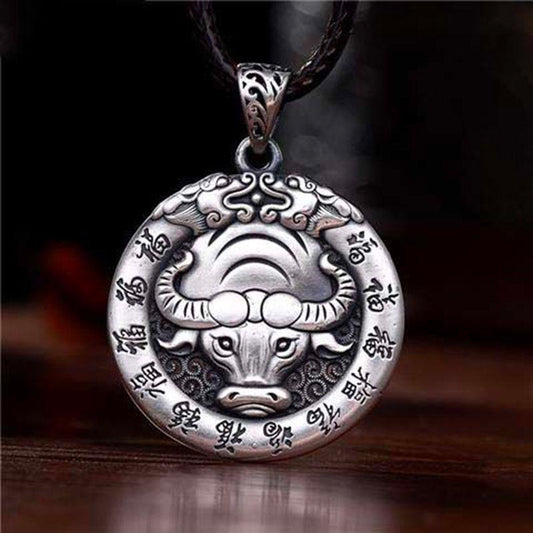
These live store designs are selected for their relationship to enamel color, metal outlines, and Chinese motif-making. They are contemporary jewelry - not historical artifacts - and their value lies in how traditional craft ideas are reinterpreted at a wearable scale.

Pipa Rhythm in Green
The pipa silhouette links musical culture with green stone and enamel detail, creating a compact example of form, line, and color working together.

Magpie and Jade
A bird motif, cool jade, tassel movement, and small enamel fields translate auspicious decorative language into a pendant composition.

Bamboo, Gourd, and Blue Enamel
Slender bamboo leaves and small gourd drops show how botanical symbolism can be organized through silver lines and enamel accents.
Frequently Asked Questions
What is Chinese cloisonne called?
The formal Chinese name is tongtai qiasi falang, meaning copper-body wire-inlaid enamel. Jingtailan, or Jingtai blue, is the best-known popular name.
Was cloisonne invented during the Jingtai reign?
No. The Jingtai era made the craft especially famous, but Chinese examples and museum attributions extend back to the Yuan period.
Why is Chinese cloisonne often blue?
Cobalt and turquoise grounds created a strong contrast with gilded wire and multicolored motifs. Blue became historically prestigious, but cloisonne can use many ground colors.
Is cloisonne made of porcelain?
Traditional Chinese cloisonne is usually enamel on a copper body, not porcelain. Both use firing, but their bodies, preparation, and decorative structures differ.
What is the difference between cloisonne and painted enamel?
Cloisonne uses attached metal wires to divide color cells. Painted enamel places pictorial color directly on a prepared metal surface without a complete wire-cell network.
How many times is cloisonne fired?
There is no single fixed number. Enamel shrinks during firing, so artisans refill and refire the cells as many times as needed for an even surface.
How can I tell whether a piece is handmade?
Inspect the continuity of the wire, cell filling, polish, reverse construction, and fittings. Small irregularities may indicate handwork, but provenance and expert study matter more than one visual clue.
Is cloisonne still made in China?
Yes. Beijing remains a major center, while workshops and designers elsewhere also produce decorative objects, public art, and jewelry using traditional and adapted techniques.
References
- China Intangible Cultural Heritage Network. "Copper-Body Wire-Inlaid Enamel (Cloisonne) Making Technique." National intangible cultural heritage project record. Accessed August 2026.
- The Palace Museum, Beijing. "Enamels" collection overview and catalogue materials on copper-body cloisonne enamel. Accessed August 2026.
- The Palace Museum, Beijing. Encyclopedic entry on Jingtailan and educational materials on enamel classifications. Accessed August 2026.
- Garner, Harry. Chinese and Japanese Cloisonne Enamels. London: Faber and Faber, 1962.
- Quette, Beatrice, ed. Cloisonne: Chinese Enamels from the Yuan, Ming and Qing Dynasties. New York: Bard Graduate Center, 2011.