At first glance, a Chinese sugar painting looks like a piece of amber-colored line art. Watch one being made, however, and the real skill becomes clear: an artisan lifts a ladle of warm syrup and draws a dragon, fish, flower, bird, or zodiac animal directly onto a smooth slab. The image must be planned, poured, connected, and lifted before the sugar cools.
Chinese sugar painting, or tánghuà (糖画), sits at the meeting point of drawing, confectionery, sculpture, and live performance. The finished object matters, but so do the quick hand movements, control of temperature, and public interaction that bring it into being. Traditionally encountered at markets, temple fairs, parks, and festival gatherings, it is both a sweet and a small piece of street theater.

Information Snapshot
| Chinese name | 糖画 |
|---|---|
| Pinyin | Tánghuà |
| English name | Chinese sugar painting |
| Common Chengdu names | 倒糖饼儿, 糖粑粑儿, and 糖灯影儿 |
| Main material | Heated sugar syrup brought to a workable viscosity |
| Core tools | Heat source, sugar pot, ladle, smooth slab, small spatula, and bamboo skewers |
| Basic techniques | Heating, pouring, line drawing, filling, joining, attaching the skewer, cooling, and lifting |
| Common subjects | Dragons, phoenixes, fish, zodiac animals, flowers, birds, insects, theatrical figures, and contemporary motifs |
| Traditional settings | Markets, temple fairs, streets, parks, and festival events |
| National heritage project | Sugar Sculpture (Chengdu Sugar Painting) |
| Project details | Sequence 864; code VII-88; second batch, 2008; Traditional Fine Arts |
| Protection unit | Jinjiang District Cultural Center, Chengdu |
What Is Chinese Sugar Painting?
Sugar painting is a freehand method of shaping heated sugar syrup on a flat surface. Instead of using pigment on paper, the maker lets a thin stream of syrup fall from a ladle. Each movement can form an outline, a vein in a leaf, the scale of a dragon, or a structural bridge that keeps the design from breaking. Larger areas may be filled with closely spaced lines or a controlled pool of sugar.
The simplest works are flat silhouettes attached to a bamboo skewer. More ambitious pieces can combine separate flat elements into a three-dimensional basket, figure, or decorative structure. Because the material begins to harden immediately, the maker cannot pause for long or erase a line. The craft therefore depends on memory, practiced composition, and an exact understanding of how the syrup behaves.
The English term “sugar painting” is useful because it captures the drawing-like action, yet the craft is not merely illustration. Its lines must also carry weight. A beautiful dragon that has weak joints may crack when lifted; a structurally sound design with clumsy proportions loses its visual force. The maker is simultaneously a draftsman, confectioner, and builder.
How Should the History of Sugar Painting Be Understood?
China has a long history of shaping sugar into people, animals, and decorative objects. Historical references to figurative and molded sugar confections offer important background for later sugar arts. They do not, however, prove that today’s ladle-poured sugar painting existed in an unchanged form thousands of years ago.
Sources discussed by Chinese museums and heritage institutions mention earlier molded sweets, ritual sugar figures, and other sugar objects. The national heritage project record also refers to a passage associated with the Compendium of Materia Medica, in which refined sugar was heated and formed in molds as people, lions, and elephants. Such evidence shows that sugar had long been treated as a modeling material as well as food.
For Chengdu, one of the clearer local written references frequently cited is Fu Chongju’s Chengdu Tonglan, published in 1909, which records local sugar cakes. This is more useful for tracing Chengdu’s documented street culture than assigning the craft an exact ancient birthday. A popular story links sugar painting to the Tang poet Chen Zi’ang, but this should be presented as folklore, not proof that he invented it.
The most cautious conclusion is also the most interesting: sugar painting developed from older Chinese sugar-working practices and gradually took on recognizable local forms through markets, festivals, performance traditions, and artisan lineages. Its history is a process of adaptation, not a single invention frozen at one moment.
What Materials and Tools Do Sugar-Painting Artisans Use?
The central material is a sugar mixture that can be melted, drawn into a steady stream, joined while warm, and hardened after cooling. Recipes vary among regions and practitioners. White sugar, brown sugar, malt syrup, and other mixtures may be used in different proportions. There is no single formula that defines every authentic sugar painting.

The essential working set
- Heat source and sugar pot: used to melt the mixture and hold it at a workable temperature.
- Ladle or small spoon: the main drawing instrument. Its lip, tilt, height, and speed affect the flow.
- Smooth slab: traditionally stone or marble in many descriptions, though metal work surfaces also appear in contemporary demonstrations.
- Small spatula: slides beneath the cooled design so it can be lifted without snapping.
- Bamboo skewer: gives the finished flat work a handle and becomes part of its supporting structure.
Modern artisans may add thermometers, specialty scrapers, tweezers, silicone tools, molds, or display equipment. These can improve consistency or enable new forms, but they should not be mistaken for a universal historical tool kit. The most recognizable technique still rests on a pot, a ladle, a flat surface, and an experienced hand.
How Is a Sugar Painting Made?
The process is fast, but it is not careless. A skilled maker has already considered the subject’s proportions, the order of lines, and the points that must connect before the ladle begins to move.
- Prepare and heat the sugar. The mixture is warmed until it reaches a fluid but controllable state.
- Judge the consistency. Color, viscosity, and the ability to form a fine strand help the maker decide whether the syrup is ready.
- Begin the outline. The ladle moves above the slab while syrup falls in a continuous line. Height, speed, and wrist angle control thickness.
- Add internal structure. Lines, loops, scales, petals, and filled areas give the motif detail while reinforcing fragile sections.
- Attach the skewer. Before the work fully sets, a bamboo stick is laid across a strong part of the design and bonded with more syrup.
- Cool and lift. Once the sugar hardens, a small spatula releases the work from the slab.

The maker works against the cooling clock. If the syrup is too hot, lines may spread and merge; if it is too cool, the stream breaks and joints fail. A line that looks purely decorative may also be a brace. This union of appearance and structure explains why experienced artisans can produce complicated works quickly while beginners often create brittle, disconnected shapes.
Some makers construct three-dimensional pieces by drawing separate components, then joining them with warm syrup. The technique broadens the visual possibilities, but the familiar flat, skewer-mounted form remains central to the public image of sugar painting.
Why Is Sugar Painting More Than Candy?
Calling sugar painting “candy” is not wrong, but it is incomplete. In a traditional street setting, people first see the making, then receive the object. The performance transforms an inexpensive ingredient into a moment of suspense: Will the line become a fish, a phoenix, or the most coveted dragon? The audience watches skill become visible in real time.
The work also draws on a shared visual vocabulary. A few decisive curves can make a bird recognizable; repeated loops suggest scales; compact silhouettes keep zodiac animals legible from a distance. These conventions connect sugar painting with paper cutting, shadow puppetry, folk illustration, carving, and theatrical imagery. Chengdu traditions are especially noted for translating Sichuan opera figures and dramatic scenes into sugar forms.
Its temporary nature is part of the meaning. Sugar reacts to heat and humidity, and a finished piece may soften, become sticky, bend, or break. Unlike stone carving, it is rarely meant to survive for generations. The heritage lives most fully in the knowledge of how to make it, the relationship between maker and audience, and the continuation of the social settings in which it is practiced.
Popular Motifs and Their Meanings
Sugar-painting motifs balance three needs: they must be recognizable, structurally workable, and appealing to the person receiving them. Animals, flowers, birds, insects, opera characters, and auspicious emblems are common, while new designs can reflect animation, local landmarks, or current events.

- Dragon: commonly associated with auspicious power, vitality, rain, and cultural identity. It is also visually impressive and often treated as a prized result at an interactive stall.
- Phoenix: often evokes harmony, celebration, and renewal, especially when paired with the dragon.
- Fish: widely connected with abundance because the Chinese word for fish, yú, echoes the word for surplus.
- Zodiac animals: create an immediate personal connection through a visitor’s birth year.
- Peony and other flowers: may suggest prosperity, beauty, seasonal renewal, or good fortune.
- Birds and insects: allow the maker to display rhythm, movement, and fine line control.
- Theatrical figures: can carry local narrative identity, especially in Chengdu works inspired by Sichuan opera.
These meanings are broad cultural associations rather than a fixed code. Not every fish carries exactly the same message, and artisans may choose a subject for its shape, popularity, or entertainment value. Interpretation should leave room for regional habits and individual invention.
The Sugar-Painting Wheel and Chengdu Street Culture
One memorable Chengdu practice is often described as “turning for a sugar cake.” A wooden wheel displays different motifs around its face. A customer spins an arrow or pointer, and the result determines which design the artisan will make. A simple turn can lead to a bird, fish, insect, zodiac animal, or—if fortune smiles—a dragon.
The wheel is more than a sales device. It turns the exchange into a game, gathers onlookers, and gives the making a beginning, suspense, and reward. Children may hope for the largest or most difficult motif, while adults recognize the scene as part of local festival memory. This interactive form is strongly associated with Chengdu’s public sugar-painting culture, but it should not be described as a compulsory feature of every sugar-painting tradition in China.
Sugar Painting, Blown Sugar Figurines, and Other Sugar Arts
Several Chinese sugar crafts share ingredients and public settings, which makes their English names easy to confuse. The key difference is how the material is formed.
The official national project title—Sugar Sculpture (Chengdu Sugar Painting)—uses the broader term “sugar sculpture” while naming Chengdu sugar painting as the local form. Careful writing should retain that official wording without collapsing all sugar-based crafts into a single technique.
Regional Variations and Contemporary Settings
Sugar shaping and syrup drawing are not confined to Sichuan. Public cultural sources record sugar-painting practices in Beijing temple fairs, Chongqing, other parts of Sichuan, Shandong, and beyond. Names, recipes, favored designs, and methods differ. Some traditions emphasize rapid flat drawing; others favor dense filled areas, assembled forms, or three-dimensional work.
This diversity is better understood as a family of regional practices than as one perfectly uniform national recipe. “Authenticity” therefore should not be measured by whether every artisan uses the same sugar mixture or draws the same dragon. More useful questions are whether the maker understands the material, maintains a coherent local or learned tradition, and can explain how technique and context relate.

Today sugar painting appears at museums, heritage festivals, school workshops, community events, tourist destinations, and online videos as well as street stalls. New display formats can attract learners and help artisans reach broader audiences. At the same time, a staged demonstration is not identical to an older market practice, and a complex display object may be intended for viewing rather than eating. Clear captions help audiences understand these differences without treating change as cultural loss.
Safeguarding the Heritage Today
The Chengdu project’s national recognition in 2008 created an official framework for documentation, education, and public presentation. The project is listed under Traditional Fine Arts, with the Jinjiang District Cultural Center as its protection unit. Fan Deran, known for line-and-plane compositions and Sichuan opera subjects, was recognized as a national representative bearer; he lived from 1924 to 2015, so references to him should use the historical past tense.
Preservation is not simply a matter of storing old sugar pieces. Because sugar absorbs moisture and changes with temperature, finished works are inherently fragile. Long-term safeguarding depends more on recording techniques, supporting experienced practitioners, creating opportunities to teach, and ensuring that the craft remains visible in real community life.
Public activities in Chengdu have included heritage demonstrations, festival experiences, community programs, museum interpretation, and educational workshops. These programs can create new audiences, but transmission also requires sustained practice. A short workshop may introduce the basic motion; mastering heat, flow, structure, and freehand composition takes far longer.
Economic reality matters as well. If detailed works demand years of training but bring little income, younger practitioners may hesitate to commit. Responsible cultural tourism, paid teaching, commissions, and well-documented contemporary design can help, provided that marketing does not replace the craft’s history with exaggerated origin stories.
How to Appreciate a Sugar Painting
Begin by watching the hand rather than only photographing the result. Notice how the maker adjusts the height of the ladle, changes speed, pauses at a joint, and reinforces a line that must carry weight. Look for the order of construction: a confident artisan often builds from the major outline toward internal details while keeping the entire design connected.
Then consider the relationship between motif and material. A strong design uses flowing lines because syrup naturally forms them. Empty spaces can make the image lighter and more transparent, while dense passages add strength. Slight irregularities often reveal genuine freehand work rather than failure.
If you are offered a piece to eat, remember that edibility depends on ingredients, hygiene, handling, and storage. A museum display, decorative showpiece, or item of uncertain provenance should not automatically be treated as food. Molten sugar can cause serious burns, so children should never heat or pour it without direct, qualified supervision.
Cultural Symbols and Contemporary Interpretations
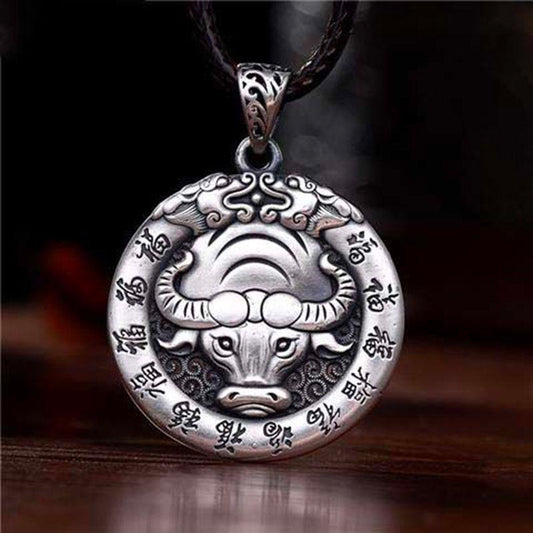
These contemporary design examples draw on dragon, phoenix, and swallow imagery. Their symbolism is presented here as a modern cultural connection; none is identified as a sugar painting or as part of the Chengdu national heritage project.

Chinese Dragon Head Opening Ring — Sterling Silver
The dragon is widely associated with vitality, auspicious power, and cultural identity in Chinese decorative traditions.
$66.99
Dragon & Phoenix Open Ring
The dragon-and-phoenix pairing is commonly associated with harmony, balance, celebration, and auspicious union.
$89.99
Swallow Embroidery Wind Chime DIY Set
The swallow often evokes spring, joyful return, renewal, and good news in Chinese visual culture.
$36.99Frequently Asked Questions
Is Chinese sugar painting a national intangible cultural heritage?
More precisely, Sugar Sculpture (Chengdu Sugar Painting) is a national representative intangible cultural heritage project in China. This does not mean every sugar-painting practice or vendor nationwide belongs to that project.
Is Chinese sugar painting listed by UNESCO?
No. The designation discussed here belongs to China’s national intangible cultural heritage system, not UNESCO’s Representative List.
When did Chinese sugar painting originate?
No single securely documented date has been established. Earlier records describe figurative and molded sugar objects, while clearer local references to Chengdu sugar cakes appear in later sources. These antecedents should not be treated as identical to modern freehand sugar painting.
Did the Tang poet Chen Zi’ang invent sugar painting?
A popular legend connects Chen Zi’ang with the craft, but it is folklore rather than conclusive historical evidence.
What kind of sugar is used?
Recipes vary. White sugar, brown sugar, malt syrup, and other mixtures may be used, so no single formula defines all authentic sugar painting.
How is a sugar painting made?
An artisan heats sugar to a workable consistency, pours it onto a smooth slab to form lines and filled areas, joins the structure, attaches a bamboo skewer, lets it cool, and carefully lifts it.
What is the difference between sugar painting and blown sugar figurines?
Sugar painting is generally poured onto a flat surface. Blown sugar figurines are shaped from a warm sugar mass through blowing, pinching, pulling, and cutting.
Is sugar painting the same as sugar sculpture?
Not exactly. Sugar sculpture is a broader category that can include pouring, molding, blowing, pulling, and other methods. Sugar painting is one distinct approach within that field.
Can sugar paintings be eaten?
They were traditionally made as edible objects, but suitability depends on ingredients, hygiene, handling, and storage. Display pieces should not automatically be assumed to be food-safe.
Why must the artisan work quickly?
The syrup starts cooling as soon as it leaves the ladle. The outline, connections, skewer, and final adjustments must be completed before it loses its workable consistency.
Why are stone or marble slabs used?
A smooth, relatively cool surface helps the sugar set and allows the finished work to be released with a small spatula.
Can a sugar painting be preserved for a long time?
Usually not. Sugar absorbs moisture and may soften, become sticky, deform, or break when temperature and humidity change.
Is sugar painting safe for children to make?
Molten sugar can cause serious burns. Children should participate only under direct supervision and should not heat or handle the syrup independently.
References
- China Intangible Cultural Heritage Network, “Sugar Sculpture (Chengdu Sugar Painting),” National Representative Project Record.
- China Intangible Cultural Heritage Network, profile of Fan Deran, National Representative Bearer.
- Chengdu Museum, “‘The Flavor of the New Year Has Arrived’: Using a Ladle as a Brush and Sugar as Ink.”
- The People’s Government of Sichuan Province, “Chengdu Sugar Painting: A Sweet Craft in Need of Younger Practitioners.”
- Sichuan Provincial Local Chronicles Office, “Yanting Sugar Painting: Using a Ladle as a Brush and Sugar as Ink.”
- The People’s Government of Beijing Municipality, “Making Sugar Paintings.”
- Chengdu Jinjiang District People’s Government, materials on safeguarding, transmission, and public presentation of Chengdu sugar painting.