The Chinese Showcase journal Chinese culture
Who Is Jiang Ziya
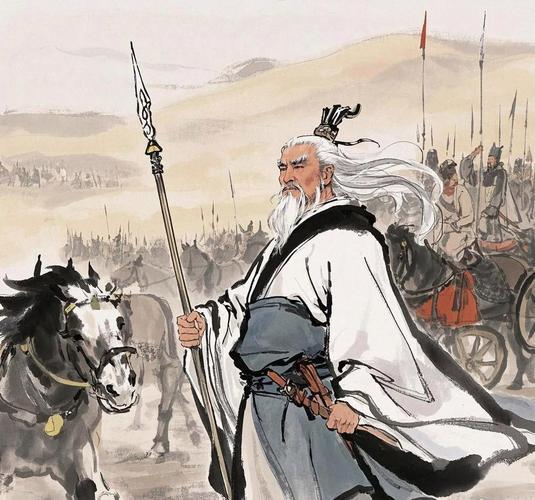
In the five-thousand-year history of Chinese civilization, there exists a figure who is both a historical founding hero and a mythological god; both a revered master of military strategy and a guardian deity in popular belief. His life spans the gap from humble beginnings to great achievement, and his image has transformed from human to divine to a cultural symbol. He is Jiang Ziya, a legendary figure with multiple identities and profound significance in Chinese culture.
1. Historical Reality: From Butcher to Founding Hero
1.1 Mysterious Origins: A Humble Son of the Eastern Sea
Jiang Ziya, born Lü Shang, with the surname Jiang and styled Ziya, is often called Tai Gong or Taigong Wang in later generations. His exact birth year is uncertain, but it is generally believed he was born around 1128 BCE and passed away around 1015 BCE, living over a hundred years.
His birthplace has been debated. According to Records of the Grand Historian (Shiji), he was a native of the eastern sea region. Mencius also states he lived by the eastern shore. The Jin Dynasty scholar Zhang Hua identifies his birthplace more precisely as Donglüli, Haiqu City, in modern-day Rizhao and Ju County, Shandong Province. Scholars generally agree his birthplace was in this area by the Yellow Sea in eastern Shandong.
Jiang Ziya's ancestors traced back to the descendants of Emperor Yan. During the Xia-Shang transition, they were enfeoffed in Lü (present-day Nanyang, Henan). By the time of his birth, his family had fallen on hard times, and his youth was full of hardships.
1.2 Late Bloomer: Meeting King Wen at the Weishui River
Jiang Ziya is a classic example of a "late bloomer." Before meeting King Wen of Zhou, he lived in obscurity. Historical records mention he worked as a butcher in Chaoge (modern-day Qixian, Henan), ran a tavern, and attempted to advise various lords but was ignored. Even his wife left him.
Despite hardships, he diligently studied astronomy, geography, military strategy, and statecraft. Only in his seventies did he finally encounter an opportunity for greatness. At the Weishui River, he famously caught King Wen’s attention through a unique method of fishing, giving rise to the proverb: "Tai Gong fishes, willing ones take the bait." King Wen appointed him as chief advisor and granted him the surname Lü, hence he was also called Lü Shang.
1.3 Assisting Zhou to Overthrow Shang: The Founding Hero
Under King Wen, Jiang Ziya strengthened internal governance and expanded national power. After Wen’s death, King Wu respected him as Shangfu, both teacher and father. In 1046 BCE, Jiang Ziya led the campaign against Shang, achieving a decisive victory at the Battle of Muye. The defeated Shang king, Zhou, perished, and the Zhou dynasty was established.
1.4 Founding Qi: The First Ruler and Governance Philosophy
Following the Zhou conquest, Jiang Ziya was enfeoffed in Qi (Yingqiu, modern Linzi, Shandong) as its founding ruler. Implementing pragmatic governance—promoting trade, easing regulations, and utilizing natural resources—he strengthened Qi, making it a major state. His lineage ruled Qi for over 700 years, producing notable descendants like Duke Huan of Qi.

2. Master of the Hundred Schools: Cultural Status and Intellectual Influence
2.1 Founder of Military Strategy and Liu Tao
Jiang Ziya is revered as the originator of military strategy. Many of King Wu's plans were attributed to him. He is traditionally credited with authoring Liu Tao (Six Secret Teachings), one of China’s earliest military classics, encompassing politics, strategy, and philosophy.
2.2 Pioneer of Thought
Jiang Ziya advocated a meritocratic approach: "Rulers appoint the capable, officials employ the capable, scholars respect the capable." His policies laid the groundwork for the intellectual flourishing of Qi, inspiring the Hundred Schools of Thought, and influencing Confucian, Daoist, Legalist, and military traditions.
3. Official Deification: Jiang Ziya as Martial King
3.1 Tang Dynasty Recognition
During the Tang Dynasty, Emperor Taizong ordered the construction of Tai Gong Temples, establishing annual rituals and honoring Jiang Ziya alongside Confucius. Emperor Xuanzong later posthumously conferred the title Wu Cheng Wang, elevating him to parity with Confucius.
3.2 Song to Ming Dynasties
The Song Dynasty continued this tradition. However, by the Ming Dynasty, Emperor Zhu Yuanzhang replaced Jiang Ziya’s official status with that of Guan Yu, reflecting shifts in political and philosophical priorities.
4. God Among Gods: Fengshen Yanyi and Mythical Transformation
4.1 Jiang Ziya in Fengshen Yanyi
In the Ming novel Fengshen Yanyi, Jiang Ziya is portrayed as a disciple of Yuanshi Tianzun, with the Taoist title Flying Bear. He assists King Wu to overthrow Shang, wields a divine whip, rides the Four Non-Similar, and manages the mortal and divine realms simultaneously.
4.2 Cultural Construction of Image
In the novel, Jiang Ziya connects the human and divine worlds, serving as the story’s narrative axis. The derivation of his "Flying Bear" title comes from historical misinterpretation of divinatory texts, illustrating how myth builds upon history.
4.3 Folk Belief
In popular culture, Jiang Ziya is a protector deity, known for warding off evil and symbolizing light and guidance. He is revered as a household guardian in many regions, making his presence more accessible to ordinary people.

5. Contemporary Resonance: Modern Reinterpretations
5.1 Jiang Ziya in Film and Animation
Jiang Ziya continues to inspire media portrayals. In the 2006 TV series Investiture of the Gods, he appears as wise and serene. The 2020 animated film Jiang Ziya reimagines him as a younger, more humanized character facing ethical dilemmas, earning 1.603 billion RMB at the box office and ranking second among Chinese animated films.
5.2 Cultural Inspiration
Jiang Ziya’s transformation from historical figure to mythic icon reflects Chinese culture’s dynamic reinterpretation. His story emphasizes the themes of late blooming and talent meeting the right leader, inspiring generations to pursue ideals despite adversity.
References
- Baidu Baike. "Jiang Taigong."
- Baidu Baike. "Jiang Ziya (Fengshen Yanyi Character)."
- Da Zhong Wang. "Jiang Ziya: Outstanding Politician, Strategist, and Advisor," 2013-12-12.
- Li Yihui. "Why Jiang Ziya Became the First Protagonist—A Classical Reading of Fengshen Yanyi," Bolan Qunshu, 2020-11-01.
- The Paper. "Jiang Ziya: From Military Founder to Daoist Immortal," 2020-10-07.
- People’s Pictorial. "Jiang Ziya: Chinese Deity Reimagined," 2023-07-05.
- Yishiweijian. "Jiang Ziya as the Ancestor of the Hundred Schools and Martial Saint," 2022-08-16.
- Shaanxi Provincial Local Records Office. "Lü Shang," 2009-03-11.
- Xiao Liu Kan Fengshen. "Jiang Ziya in Folk Belief: Lantern and Light God," 2018-05-13.
- Zeng Wenfang. "Jiang Ziya and Meritocracy: Choosing and Respecting the Capable," CCP Shaanxi Party School.
Three Picks from Chinese Showcase
Three contemporary shop selections inspired by this article’s materials, motifs, or wider decorative themes. These products are not historical artifacts. Check each product page for current specifications, price, and availability.

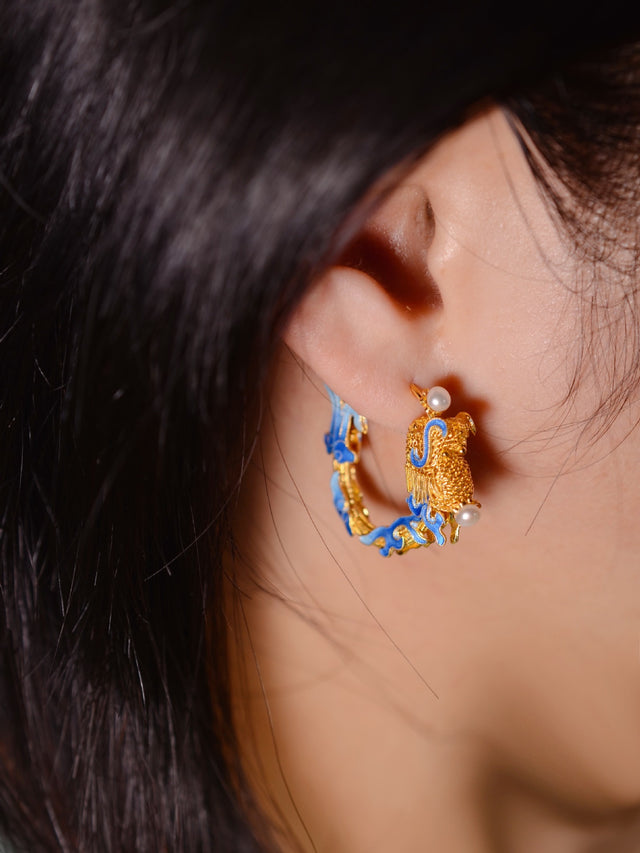
Blooming Buddha Stud Earrings – 12×13mm Handcrafted Silver or Gold-Plated, Original Design
View product details
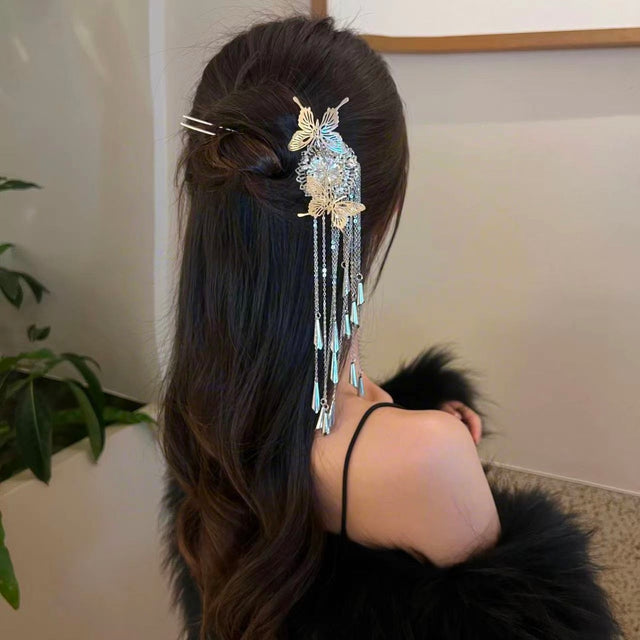
Sequin tassel butterfly duck beak clip flower crystal back spoon hair clip
View product details
Chinese Butterfly Open Ring-Sterling Silver
View product detailsStories, symbols and everyday objects
Our journal explores Chinese culture and design. Traditions and interpretations vary by region and source. For a purchase, use the specifications on the individual product page.
About Chinese ShowcaseQuestions or corrections? Contact us ↗