The Shan Gui Coin (Shan Gui Hua Qian) is an ancient Chinese talisman deeply rooted in Taoist culture. Unlike ordinary coins used as currency, Shan Gui Coins were created for symbolic and spiritual purposes. They represent protection, balance, and humanity’s connection with nature.
In modern times, Shan Gui Coin motifs are often incorporated into feng shui jewelry, especially pendants crafted from sterling silver and combined with symbols such as the Bagua and the mythical Pi Xiu.

Historical Origins of the Shan Gui Coin
The concept of the Shan Gui Coin can be traced back to ancient China, where mountains were regarded as sacred spaces inhabited by powerful spiritual forces. The term “Shan Gui” literally refers to a mountain spirit or guardian entity.
Rather than numerical inscriptions, Shan Gui Coins typically feature symbolic engravings. These designs reflect Taoist cosmology, the balance of Yin and Yang, and the belief that harmony with nature leads to protection and stability.
Historically, such coins were worn or carried by travelers, merchants, and individuals seeking spiritual reassurance and symbolic protection.
Symbolism of Shan Gui Coin in Taoist Culture
In Taoist philosophy, Shan Gui Coin does not represent fear or negativity. Instead, it symbolizes a protective force that maintains balance between the human world and the natural realm.
- Protection: Symbolically believed to ward off negative influences
- Balance: Represents harmony between Yin and Yang energies
- Awareness: Encourages mindfulness and respect for natural forces
When combined with other traditional symbols such as the Bagua and Pi Xiu, the meaning of the Shan Gui Coin is further enriched, representing both spiritual balance and the attraction of positive energy.
Why Is Shan Gui Coin Used as a Talisman?
Shan Gui Coin has long been used as a talisman because it embodies ancient Taoist wisdom. Rather than promising supernatural outcomes, it serves as a symbolic reminder of balance, intention, and alignment with positive energy.
For many people today, Shan Gui Coin jewelry is worn as a meaningful personal accessory or given as a thoughtful gift representing protection, peace, and good fortune.
Inspired by the cultural symbolism discussed above, the following piece brings the ancient Shan Gui Coin concept into a modern wearable form.

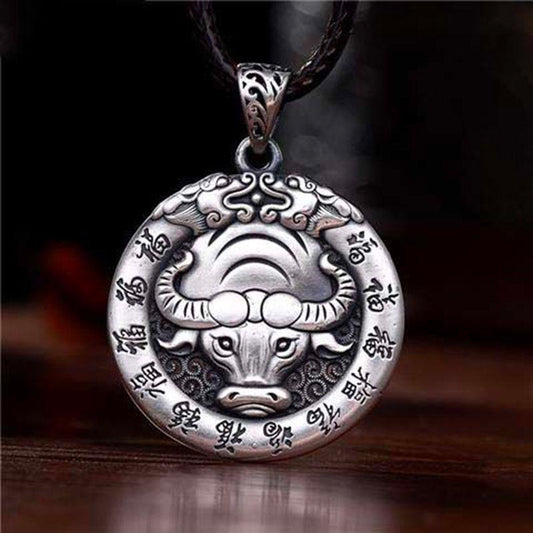
Rotating Bagua Pi Xiu Pendant Necklace
925 Sterling Silver Feng Shui Amulet
Inspired by the ancient Shan Gui Coin, this handcrafted pendant features a rotating Bagua design paired with the legendary Pi Xiu, symbolizing protection, balance, and the attraction of positive energy.
- Rotatable Bagua Eight Trigrams centerpiece
- Pi Xiu symbol associated with protection and fortune
- Crafted from solid 925 sterling silver
- Rooted in traditional Taoist symbolism
Featured piece inspired by the cultural symbolism discussed in this article.
Who Should Wear a Shan Gui Coin?

Shan Gui Coin jewelry is suitable for individuals who appreciate traditional Chinese culture, Taoist philosophy, or symbolic accessories with deeper meaning.
Recommended for:
- Those interested in Eastern philosophy and feng shui symbolism
- People seeking a symbolic sense of balance or protection
- Collectors of cultural or spiritual jewelry
Not recommended for:
- Individuals uncomfortable with spiritual or symbolic concepts
- Those expecting guaranteed outcomes or supernatural results
Care and Wearing Suggestions
To maintain the appearance of sterling silver jewelry, avoid prolonged exposure to water, chemicals, or perfumes. Clean gently with a soft cloth and store separately when not in use.
Liu Hai Playing with the Golden Toad and Shan Gui Taoist Coin
This traditional motif carries rich symbolic meaning. The story of “Liu Hai Playing with the Golden Toad” originates from Taoist legend. The pattern typically depicts a young boy with a tuft of hair, using a string of coins to playfully fish the Golden Toad. The Golden Toad is a three-legged frog, traditionally believed to bring wealth and prosperity. The motif symbolizes flourishing wealth and happiness.
According to the Qing dynasty record by Zhai in Tongsu Pian:
“The Huguang Tongzhi records: Liu Yuanying, also known as Haichanzi, was a native of Guangling. He once served as prime minister under Prince Yan, Liu Shougong. One day, a Taoist visited and requested ten eggs and ten coins to be placed on a table, arranging the eggs like coins or a pagoda. The Golden Toad was startled and exclaimed, ‘How dangerous!’ The Taoist said, ‘Even in a place of prosperity and pleasure, the dangers can be greater.’ He then threw everything away and left. From this, Haichanzi realized the truth, renounced worldly life, and traveled to famous mountains with the Taoist, leaving traces wherever he went. In the early Song dynasty, at Shouning Temple in Tanzhou, poems were inscribed and portraits drawn, which became the inspiration for today’s depiction of Liu Hai scattering coins.”
Liu Hai passed the imperial examination at the age of sixteen and reached the position of prime minister at fifty. After becoming a Taoist, he appeared as a white-haired elder with a lean, ascetic appearance. However, in popular folk prints, Liu Hai is depicted as rejuvenated, transformed into a lively and adorable chubby boy.

The coin itself typically has a diameter of approximately 56 mm and a thickness of about 33 mm.
Disclaimer
This article and featured product are intended for cultural, decorative, and personal expression purposes only. Any symbolic or spiritual interpretations are based on traditional beliefs and should not be considered medical, legal, or financial advice. Individual experiences may vary.