Numbers carry powerful symbolic meanings in Chinese culture. Some are associated with prosperity, harmony, and happiness, while others are believed to bring misfortune and negativity. Among these, certain numbers—especially 4—are widely regarded as unlucky. But why is this the case, and how does it influence daily life in China? Let’s explore the history, symbolism, and modern significance of unlucky numbers in Chinese tradition.
The Concept of Numerology in Chinese Culture
Chinese culture has always placed deep importance on numerology. Numbers are not merely mathematical symbols but carry spiritual, phonetic, and cultural meanings. A number’s pronunciation, its relation to yin-yang, and its presence in ancient philosophies like feng shui all contribute to whether it is seen as lucky or unlucky. Just as the number 8 is synonymous with wealth, some numbers resonate with negative words, creating an aura of misfortune.
Why Is the Number 4 Considered Unlucky?
The number 4 (sì in Mandarin) is the most infamous unlucky number in Chinese culture. Its pronunciation is nearly identical to the word for “death” (sǐ). This phonetic similarity has led to widespread avoidance of the number in everyday life. For example:
- Many Chinese buildings skip the 4th floor, similar to how Western buildings sometimes skip the 13th floor.
- Phone numbers, license plates, and ID numbers containing multiple 4s are considered unlucky and less desirable.
- Hospitals and hotels may avoid assigning the number 4 to rooms, wards, or floors.
This phenomenon is known as tetraphobia—a fear of the number 4— and is especially strong in regions like Hong Kong, Taiwan, and mainland China.
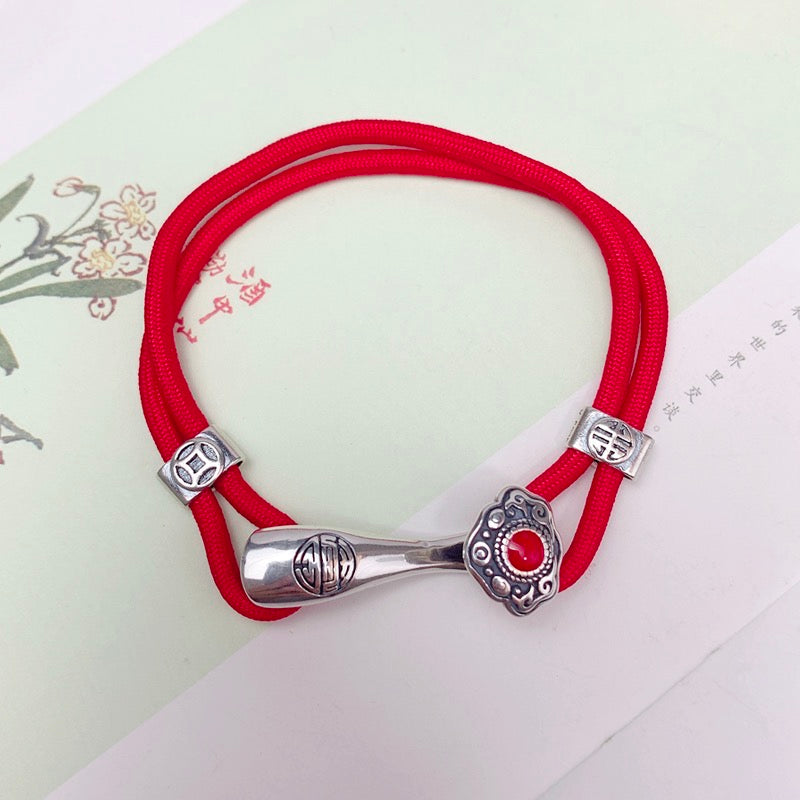
✨ Red Rope Ruyi Bracelet (Sterling Silver)
In Chinese tradition, wearing a red bracelet is believed to ward off misfortune and attract positive energy. A perfect charm to balance unlucky influences.
Shop NowOther Unlucky Numbers in Chinese Beliefs
Number 7
The number 7 (qī) has mixed symbolism. While it is sometimes associated with togetherness, it is also linked with mourning rituals. The seventh month of the lunar calendar is considered the “Ghost Month,” when spirits return to the world of the living. Thus, 7 is sometimes seen as inauspicious.
Number 5
The number 5 (wǔ) can be unlucky because it sounds like the word for “nothing” (wú). However, its meaning is complex: in other contexts, it represents the Five Elements (wood, fire, earth, metal, water) and balance in nature. Depending on the interpretation, 5 may carry either negative or positive energy.
Numbers 14 and 24
Compound numbers like 14 and 24 are particularly feared. In Chinese, 14 sounds like “want to die” (yào sǐ), and 24 can sound like “easy to die” (èr sǐ). As a result, apartments, hotel rooms, and even phone numbers with these combinations are often avoided.

💎 Little Xingshi Wealth Lucky Natural Agate Tassel Bracelet
This agate bracelet combines protective energy with wealth attraction, helping to counteract the negative impact of unlucky numbers.
Shop NowHow Unlucky Numbers Influence Daily Life
The influence of unlucky numbers extends beyond superstition—it affects consumer behavior, real estate markets, and even modern technology:
- Real Estate: Properties with the number 4 in their address often sell for less, while those with 8 sell for more.
- Business: Companies avoid launching products on dates with 4, preferring auspicious dates instead.
- Personal Life: Parents may avoid giving phone numbers or car plates containing 4 to their children, fearing bad luck.
Balancing the Energy of Numbers
While unlucky numbers are feared, Chinese tradition also emphasizes balance. Wearing protective charms, practicing feng shui, and incorporating lucky numbers (like 6 or 8) are common ways to offset negative influences. For example, pairing the number 4 with the number 8 can symbolically transform its meaning into “prosperity forever.”

🧧 Xiupi Five Emperors Coin Red Rope Bracelet
This handmade bracelet features the Five Emperors Coins, a powerful symbol in feng shui for protection against negativity and for attracting wealth.
Shop NowModern Views on Unlucky Numbers
Interestingly, attitudes toward unlucky numbers are changing. Younger generations in China sometimes treat them playfully or ignore them altogether. In fact, creative uses of numbers have become popular in online slang. For example, 520 sounds like “I love you,” while 1314 means “forever.” This modern reinterpretation shows that while traditional beliefs remain influential, culture is dynamic and evolving.
Conclusion
Numbers are more than symbols of quantity in Chinese culture—they embody layers of meaning, belief, and tradition. Unlucky numbers like 4 and 7 may still shape decisions in real estate, business, and daily life, but their power is also balanced by protective charms, feng shui, and modern reinterpretations. Whether you personally believe in the superstition or not, understanding the cultural significance of numbers offers deep insight into the richness of Chinese traditions.