Red is perhaps the most iconic and powerful color in Chinese culture. Unlike many Western traditions where red is often associated with danger or warning, in China, red symbolizes happiness, prosperity, vitality, and good fortune. From weddings to festivals, traditional clothing to lucky charms, red has been deeply woven into the cultural and spiritual fabric of Chinese society for thousands of years. This article explores the profound meaning of red in Chinese culture, its historical roots, its role in celebrations, Feng Shui, and symbolism, as well as how it continues to influence modern life.
Historical Roots of Red in Chinese Culture
Red’s prominence dates back to ancient dynasties. As early as the Shang and Zhou Dynasties, red pigments were used in ceremonies, ancestral worship, and royal rituals. It was linked to fire in the Five Elements (Wu Xing) system, representing energy, transformation, and growth. Red was also associated with the south direction, the season of summer, and the Vermilion Bird (朱雀), one of the Four Symbols in Chinese mythology, embodying vitality and power.
Red as a Symbol of Joy and Prosperity
In Chinese culture, red has always been the color of celebration. It is used extensively in weddings, where brides traditionally wear red dresses or qipaos to symbolize happiness and fertility. Red envelopes (hongbao) filled with money are given during Lunar New Year and important life milestones, believed to ward off evil spirits and bring good luck to the recipient. To this day, red decorations dominate Chinese festivals, from red lanterns to banners inscribed with auspicious characters.
Red in Spiritual and Taoist Traditions
In Taoist practices, red is a color of protection. Red talismans are often used to keep away misfortune and negative energy. It is also regarded as a color of vitality, connecting humans with divine cosmic energy. Red threads and amulets are tied around the wrist or worn as pendants to invite blessings, health, and prosperity.
Red in Feng Shui
In Feng Shui, red is considered one of the most powerful activators of positive chi (energy). It is connected to the Fire element, representing life force, passion, and recognition. Strategically placing red objects in certain sectors of the home or workplace can attract wealth, fame, and harmonious relationships. However, balance is important—too much red may bring excess fire energy, leading to restlessness or conflicts.
Red in Festivals and Daily Life
- Lunar New Year: Streets are filled with red lanterns, paper cuttings, and decorations to usher in prosperity.
- Weddings: Red clothing, fans, and accessories signify a happy marriage and the promise of new beginnings.
- Birthdays and Anniversaries: Red decorations ensure longevity and protection for elders and loved ones.
Featured Cultural Products with Red Symbolism
To understand the beauty of red in Chinese tradition, here are carefully crafted accessories inspired by cultural heritage and symbolism:
Chinese Fan and Chinese Knot Hairpin
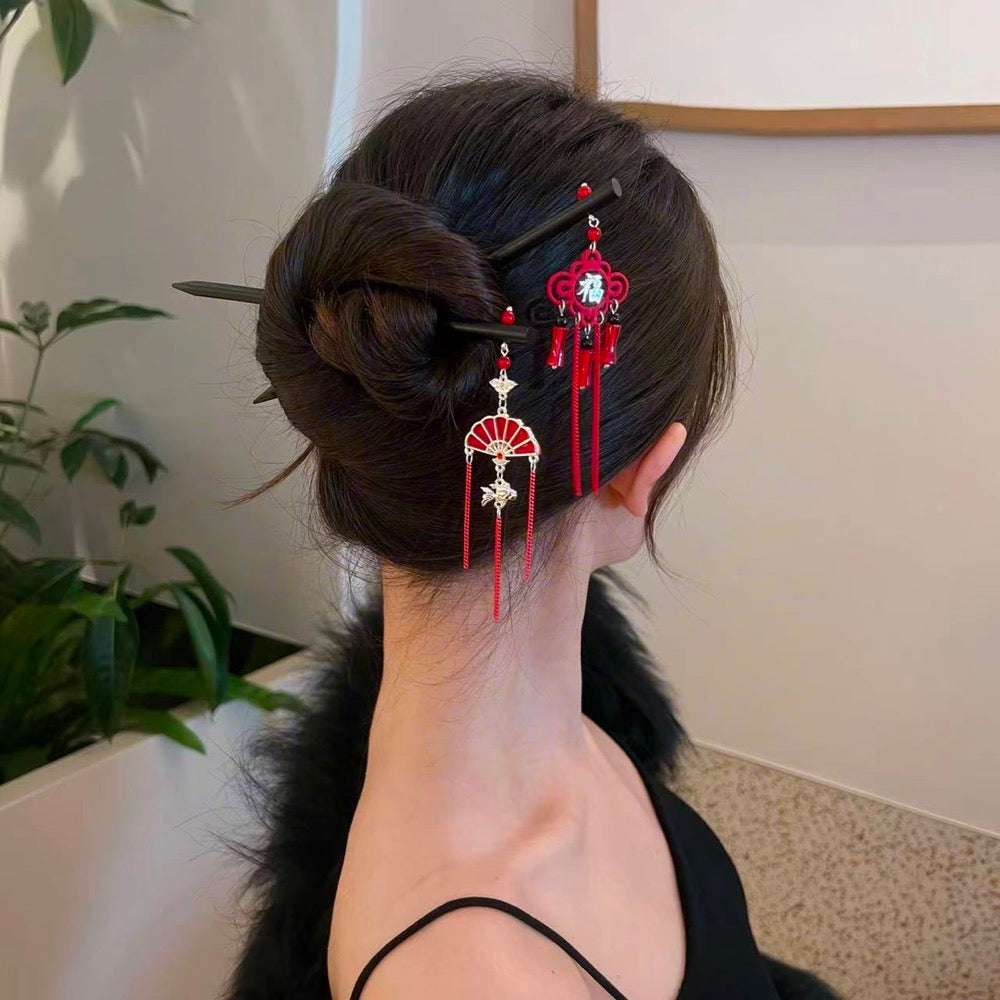
This elegant hairpin combines the symbolism of the Chinese fan with the knot, representing eternity and harmony. Its subtle red accents embody joy, fortune, and prosperity, making it a perfect accessory for weddings, cultural performances, or personal styling.
Cloisonné Phoenix Red Ring

This adjustable ring features the phoenix, a legendary bird symbolizing rebirth and prosperity, adorned with southern red stone. The red element channels good luck, success, and happiness, reflecting traditional values in a modern wearable form.
Phoenix Flower Double Happiness Wedding Fan

A wedding essential, this handcrafted fan features phoenix and floral motifs with the Double Happiness symbol (囍), representing eternal love and marital bliss. The red tassels enhance its auspicious energy, making it both a decorative keepsake and a meaningful blessing.
Modern Interpretations of Red
In modern China, red continues to symbolize good fortune but has also evolved into a fashionable and trendy color. From luxury fashion to branding, companies integrate red to signify trust, passion, and success. During global events like the Olympics, China proudly incorporates red in its uniforms and national symbols, reinforcing identity and strength.
Conclusion: The Eternal Color of Blessings
Red in Chinese culture is far more than a color—it is a philosophy, a spiritual protector, and a symbol of joy, life, and prosperity. Whether in historical rituals, Taoist practices, or modern celebrations, red continues to shape cultural identity. It carries the weight of blessings and embodies the hope for a harmonious and prosperous life.