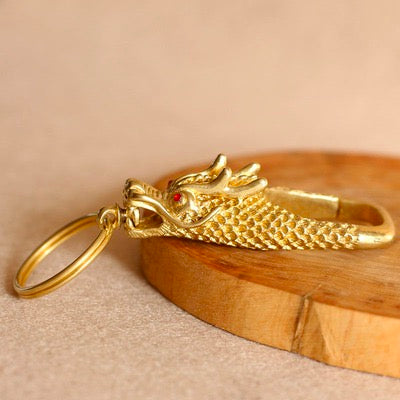
In traditional Chinese zodiac culture, the pairing of the Dragon and the Horse is often praised under the banner of “Dragon–Horse Spirit”—a symbol of vigor, ambition, and relentless upward momentum. Yet when this powerful duo enters concrete human relationships such as marriage, partnership, or long-term collaboration, their astrological interaction reveals a far more nuanced landscape than the phrase alone suggests.
Viewed through the lens of Chinese metaphysics—encompassing the Five Elements, Earthly Branches, and inherent personality archetypes—the Dragon–Horse pairing is not a static judgment of “good” or “bad,” but rather a dynamic system of energy balance, mutual stimulation, and shared growth. Exploring this relationship offers not only insight into the subtlety of zodiac wisdom, but also practical inspiration for modern interpersonal harmony.
I. Astrological Foundations: Five Elements & Earthly Branches of Dragon and Horse
To understand the deeper interaction between Dragon and Horse, one must return to the core framework of traditional Chinese metaphysics: the Five Elements (Wu Xing) and the Earthly Branches (Di Zhi).
The Dragon (Chen, 辰) occupies the fifth Earthly Branch and belongs to Yang Earth. Known as the “Water Repository,” Chen contains hidden Wood (Yi), Earth (Wu), and Water (Gui). This composite nature symbolizes expansiveness, adaptability, and transformation. As a mythical totem, the Dragon represents authority, vision, and creative power. Chen Earth is both nurturing soil and stabilizing embankment—capable of fostering growth while regulating powerful currents. As a result, Dragon natives often combine grand ambition with inner complexity.
The Horse (Wu, 午) corresponds to the seventh Earthly Branch and belongs to Yang Fire, the peak expression of Fire energy. It signifies brightness, passion, action, and forward momentum. Symbolically, the Horse represents freedom, speed, independence, and tireless effort. Pure Yang Fire is open and direct, but also fast-burning—requiring continuous motivation to sustain its force.
From a Five-Element perspective, Fire generates Earth. Thus, the Horse naturally nourishes the Dragon. The Horse’s enthusiasm, drive, and dedication serve as energetic fuel for the Dragon’s ambitions, helping transform vision into tangible achievement.
From an Earthly Branch standpoint, Chen (Dragon) and Wu (Horse) neither form a direct harmony (Liu He) nor a clash (Liu Chong). This neutral relationship grants flexibility: outcomes depend less on fate and more on conscious interaction, communication, and shared values.
II. A Symphony of Character: Ambition Meets Action
Both Dragon and Horse are strong Yang archetypes—energetic, assertive, and unwilling to settle for mediocrity. Their meeting often sparks immediate attraction, akin to kindred spirits recognizing one another.
Dragon Traits: Confident, visionary, authoritative, and strategic. The Dragon excels at setting direction and envisioning large-scale goals. However, Dragons may become overly idealistic, prideful, or resistant to compromise without grounded support.
Horse Traits: Practical, action-oriented, efficient, and freedom-loving. The Horse thrives on momentum and results, though impatience or aversion to restriction can sometimes undermine long-term stability.
Where They Excel Together:
- Vision + Execution: The Dragon defines the destination; the Horse accelerates the journey.
- Mutual Energizing: Their shared positivity and drive create a highly motivated, forward-moving dynamic.
Potential Friction:
- Leadership Tension: Dragons seek control; Horses resist confinement.
- Different Pacing: Dragons may deliberate; Horses prefer rapid action.
- Communication Style: The Horse’s blunt honesty may unintentionally wound the Dragon’s pride.

III. Love & Marriage: Balance Within a Passionate Journey
In romantic relationships, Dragon–Horse pairings often resemble a partnership forged through shared purpose and enthusiasm.
Strengths:
- Mutual admiration for competence and drive
- An exciting, dynamic lifestyle
- Strong potential for shared growth and achievement
Keys to Harmony:
- Respect roles and strengths—vision versus execution
- Practice patience and empathetic communication
- Establish meaningful shared goals
- Preserve personal freedom and independent space
IV. Career & Collaboration: A High-Impact Alliance
In business and professional settings, Dragon–Horse partnerships are often regarded as high-performance combinations.
Ideal Structures:
- Dragon as Strategist, Horse as Executor: Vision guided by decisive action
- Strategic Alliance: Each excels in separate domains while sharing outcomes
Success Factors:
- Clearly defined authority and responsibilities
- Mutual trust without micromanagement
- A shared long-term vision beyond short-term gain
V. Beyond Zodiac Labels: Timeless Wisdom for Modern Life
It must be emphasized that zodiac compatibility is only a cultural reference—not a definitive verdict. A person’s full destiny chart, upbringing, values, and emotional maturity ultimately shape relationship outcomes.
The deeper message of “Dragon–Horse Spirit” lies in transformation: converting natural intensity—whether supportive or conflicting—into sustained collective vitality. When the Dragon’s nobility tempers the Horse’s haste, and the Horse’s drive grounds the Dragon’s vision, extraordinary synergy emerges.
Rather than asking whether Dragon and Horse are “compatible,” the wiser question is how each can understand and honor the other’s core nature. Their bond is a powerful duet—requiring rhythm, trust, and balance. When the Dragon’s sky embraces the Horse’s open plains, and hooves echo in harmony with celestial roars, the result is not merely a successful relationship, but a living embodiment of shared ascent.
This, perhaps, is the enduring gift of Chinese zodiac wisdom: recognizing difference, cultivating harmony, and achieving a unity where 1 + 1 > 2.