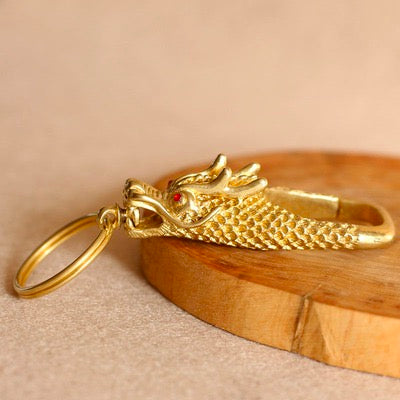
In the vast realm of Chinese mythology, the Qilin (Kirin) stands as one of the most sacred and benevolent creatures ever imagined. Revered as one of the Four Divine Beasts—alongside the Dragon, Phoenix, and Tortoise—the Qilin represents peace, virtue, and heavenly blessing. Its appearance is said to herald the birth of sages or the arrival of a golden age.
The Qilin is more than just a mythical animal; it is a reflection of Chinese moral philosophy, a symbol of compassion, harmony, and the perfect balance between heaven and earth.

✨ What Does the Qilin Look Like?
Ancient texts describe the Qilin as a majestic creature combining traits from many noble animals:
- A dragon’s head symbolizing spiritual power and authority;
- Deer-like antlers representing grace and gentleness;
- The body of a horse or ox, denoting strength and endurance;
- A scaly, golden body that glows with ethereal light;
- A tail like an ox and hooves like a horse—yet it walks so lightly that it does not crush the grass beneath its feet.
When the Qilin appears, legend says a soft breeze and fragrance fill the air. It harms no living being, eats no flesh, and embodies pure virtue and harmony—the perfect mirror of Confucian benevolence (rén 仁).
🌿 The Symbolism of the Qilin
1. The Harbinger of Peace and Prosperity
Since ancient times, the Qilin has been known as an auspicious omen. The Book of Rites declares:
“When the Qilin, Phoenix, Tortoise, and Dragon appear, the ruler’s virtue has reached perfection.”
Thus, the Qilin is said to emerge only in a virtuous and harmonious land, symbolizing peaceful governance and prosperity.
2. The Embodiment of Benevolence and Virtue
Often called the Beast of Benevolence, the Qilin embodies compassion and moral perfection. It neither kills nor destroys but protects all living things. Legend has it that on the night Confucius was born, a Qilin appeared and spat out a jade scroll predicting the arrival of a sage. Since then, the Qilin has symbolized wisdom and righteousness.
3. The Sign of a Great Ruler or Sage
Throughout history, emperors viewed the Qilin as a divine sign of legitimacy and virtue. Bronze Qilin statues stood guard at palaces, symbolizing both authority and compassion. During the Ming and Qing Dynasties, Qilin motifs adorned the rank badges of second-rank military officials, representing courage guided by virtue.
📜 Ancient Records and Legendary Tales
The earliest references to the Qilin appear in The Classic of Mountains and Seas and The Book of Rites. The Shuowen Jiezi dictionary defines it as:
“A benevolent beast; the male is called Qi, and the female Lin.”
From the Zhou to Ming dynasties, sightings of the Qilin were recorded as omens of prosperity. The most famous tale is that of “The Qilin Bringing the Jade Scroll”, foretelling the birth of Confucius—a symbol of wisdom and moral greatness.
🎨 Qilin in Chinese Art and Culture
1. Architecture and Sculpture
Since the Han Dynasty, Qilin statues have guarded palaces and temples, believed to ward off evil and attract good fortune. In Ming and Qing architecture, a pair of stone Qilin at the gate symbolized nobility, virtue, and protection.
2. Painting, Textiles, and Jade Carvings
Qilin motifs appear in embroidered robes, porcelain, bronze, and jade art. The Qilin Buzi (Qilin Rank Badge) was awarded to military officers of the second rank, representing honor, bravery, and virtue.
3. Literature and Theatre
In Chinese literature and opera, the Qilin is depicted as a divine protector of justice and truth. The phrase “Qilin Talent” (麒麟之才) is still used to praise children of extraordinary wisdom and character.
🧿 Qilin in Feng Shui and Folk Beliefs
🏠 1. Protection and Peace
A pair of Qilin statues at the entrance of a home or office is said to ward off negative energy, invite positive Qi, and ensure peace and safety.
👶 2. The Qilin Brings Children
The motif “Qilin Songzi” (麒麟送子) – “Qilin Bringing a Child” – symbolizes fertility, family happiness, and the blessing of intelligent offspring.
💼 3. Career and Success
In Feng Shui, the Qilin symbolizes career advancement and recognition. Business owners display Qilin figurines to attract wealth and honor.
📚 4. Wisdom and Education
Associated with Confucius, the Qilin also stands for intellectual success and enlightenment. Students and scholars wear Qilin charms to inspire wisdom and virtue.
🐲 Comparison: The Four Celestial Beasts
| Mythical Creature | Domain | Symbolic Meaning |
|---|---|---|
| Dragon (龙) | Heaven | Power, Majesty, Imperial Authority |
| Phoenix (凤) | Air & Harmony | Beauty, Virtue, Feminine Grace |
| Tortoise (龟) | Earth & Water | Longevity, Stability, Cosmic Balance |
| Qilin (麒麟) | Human Realm | Benevolence, Prosperity, Peace & Virtue |
🌸 The Qilin in Modern Times
Today, the Qilin continues to symbolize protection, prosperity, and moral excellence. From architecture to jewelry, its imagery connects the ancient world with modern design.
- The Japanese beer brand Kirin uses this creature to represent vitality and good fortune.
- Jade and obsidian Qilin figurines remain popular Feng Shui charms for wealth and harmony.
- Modern artists reinterpret the Qilin as a symbol of beauty, wisdom, and cultural pride.
🌕 Conclusion
The Chinese Qilin is not merely a legend—it is a living symbol of virtue and peace. For thousands of years, it has embodied the highest ideals of Chinese philosophy: harmony between heaven and humanity, compassion over strength, and moral excellence above all.
To welcome the Qilin into your home—whether through art, jewelry, or spiritual décor— is to invite blessings, wisdom, and protection into your life.
Keywords: Chinese Qilin, Kirin, Mythical Beast, Feng Shui, Auspicious Animal, Symbol of Prosperity, Benevolence, Chinese Culture, Confucian Symbol, Qilin Meaning