The Chinese Showcase journal Chinese symbols
Flaming Pearl Meaning: Huozhu in Chinese Art
Explore the flaming pearl meaning in Chinese art, its Buddhist jewel connections, dragon motifs, visual variations, and related silver jewelry.
The flaming pearl is a jewel surrounded by flames in Chinese decorative art. Often called huozhu, it evokes radiance, preciousness, and auspicious wishes. Its interpretation depends on its setting: a Buddhist wish-fulfilling jewel, a pearl between dragons, and a standalone decorative motif can carry related but distinct meanings.
A round center gives the design stability; curling flame tips give it movement. Together they turn the idea of light into a recognizable ornament. This guide explores the flaming pearl meaning through the supplied illustrations, documented museum objects, and the ways artists organize the motif.
Flaming Pearl Meaning at a Glance
| Chinese name | Huozhu, commonly translated as fire pearl or flaming pearl. |
|---|---|
| Recognizable form | A rounded jewel with pointed, curling, or radiating flames. |
| Auspicious associations | Radiance, hope, and wishes for a flourishing life; meanings vary with context. |
| Buddhist connection | Some flaming jewels represent the wish-fulfilling jewel, or cintamani. |
| Dragon connection | A pearl may become the focus of a composition with one or two dragons. |
| Where to look | Textiles, carved objects, metalwork, architectural ornament, and contemporary jewelry. |
What Is a Flaming Pearl?
A flaming pearl combines two basic elements: a jewel and surrounding flames. The jewel can be drawn as a simple circle, a spiral-centered orb, or a fuller shape with curved bands. Flames may rise above it, trail to one side, or surround it almost completely.
Nanjing University's digital presentation of Chinese brocade identifies the round pearl and flames as the motif's characteristic structure. It also records the design across several media, including textiles, metalwork, wall paintings, and stone carving.

In this black-and-white example, the upper part of the jewel curls into a spiral. Narrow white lines divide the body into curved bands, while round openings suggest highlights or ornamental studs. The broad lower curve gives the pearl weight, and the rising flames keep the outline lively.
These observations describe the supplied drawing. They do not establish its date or the material of an original object. Its value here is visual: it makes the relationship between a solid center and moving flames especially easy to follow.
What Does the Flaming Pearl Symbolize?
In the supplied pattern-book explanation, the fire pearl represents auspicious light and an enduring glow. Read in that setting, it offers an image of hope, warmth, and brightness continuing through changing circumstances. These are cultural and poetic associations.
The idea is immediately understandable through the design. A precious object occupies the center, while light seems to spread beyond its boundary. The eye recognizes something valuable being made visible. This can invite a personal interpretation of clarity, encouragement, or the wish to keep a meaningful purpose alive.

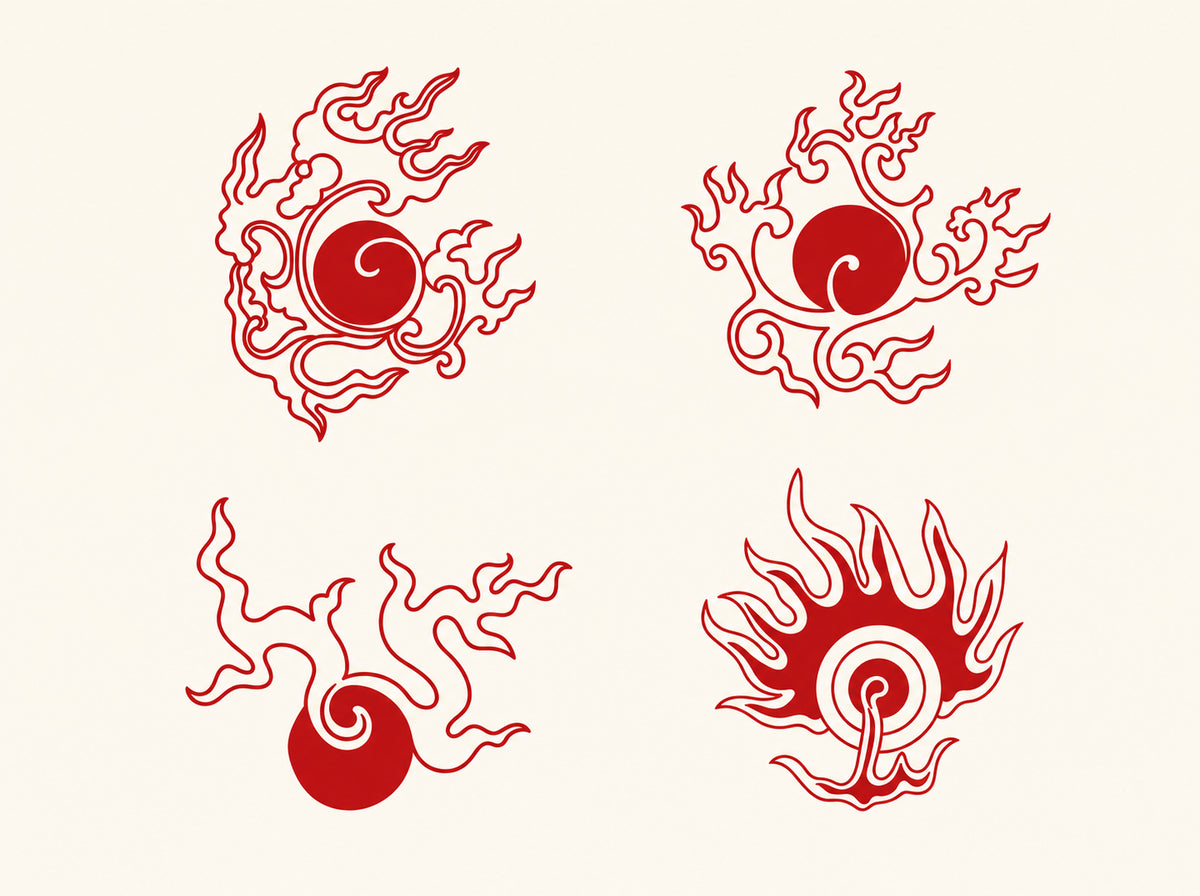
The four red versions show how much freedom exists within that basic formula. Two combine curling outlines with a dense circular center. Another allows the flames to drift sideways. The fourth sets the pearl inside a strong rising flare. Each produces a different balance of calm and energy.
For a gift, that visual language can express a wish for a bright future or a warm connection between people. The meaning comes from shared intention and cultural interpretation, rather than a promised effect of owning the design.
The Flaming Jewel in Buddhist Art
A related image is the Buddhist wish-fulfilling jewel, usually called cintamani in Sanskrit. Encyclopaedia Iranica describes versions formed as a single globe or a group of three, sometimes surrounded by a flaming halo. Its discussion connects the jewel with compassion and assistance on the path toward salvation.
A specific surviving object helps anchor that broader connection. Tokyo National Museum catalogs a Buddhist Reliquary with a Flaming Jewel, collection number E-15502, from Japan's Kamakura period, dated to the thirteenth or fourteenth century. A wish-granting jewel crowns the metal reliquary, above other Buddhist elements.
This is a documented Japanese Buddhist example, useful for understanding the wider visual tradition. It does not provide an origin date for every Chinese fire-pearl motif. When identifying a jewel on a religious object, the deity, ritual function, surrounding symbols, and collection description all matter.
The shared visual idea is concentrated radiance. Within Buddhist imagery, that light can take on specific devotional significance. In a general decorative setting, the same outward-moving flames may support a broader auspicious reading.
Why Do Chinese Dragons Appear with a Pearl?
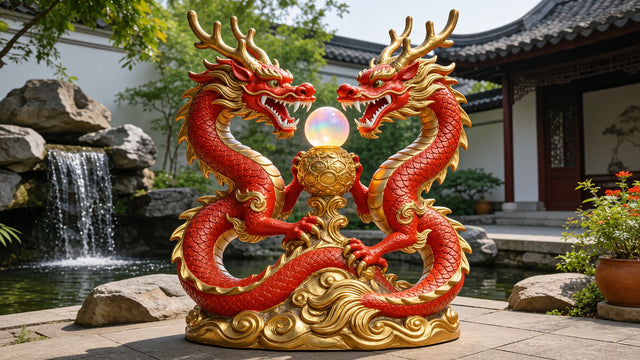
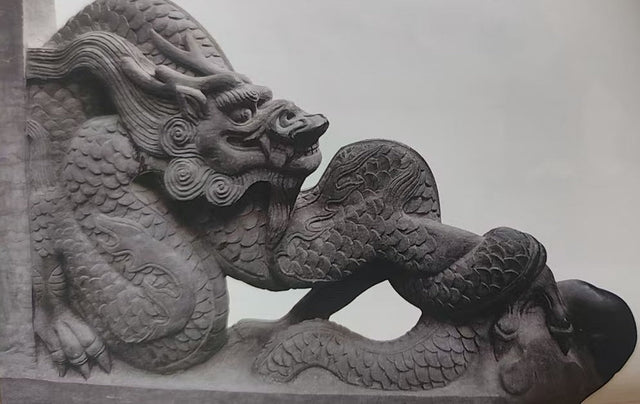
The pearl often supplies the focus of a dragon composition. Curving bodies, turning heads, and reaching claws direct attention toward a small central object. The jewel gives the scene a destination, while flames and clouds sustain its movement.
The Palace Museum in Beijing records a mid-Ming jade chime decorated with two dragons and a flaming pearl. One dragon rises and the other descends, occupying opposite sides of the face. The museum identifies the object as a decorative furnishing developed from the form of a musical instrument, and notes the importance of double-dragon pearl designs on Ming court objects.
Taiwan Historica's dictionary of folk objects offers a different setting: paired dragons facing a central fire pearl on a temple roof ridge. Its explanation connects that architectural arrangement with local protective beliefs and the rain-associated dragon tradition. The setting adds meanings that a standalone drawing does not supply.
There is therefore no single sentence that explains every dragon pearl. Begin with the actual composition, then look for a reliable description of the object and its use. The visual relationship is clear even when the precise symbolic interpretation remains open: the pearl gathers the dragons' movement into one point.
How to Read a Flaming Pearl Design

Start with the center. A complete circle makes the jewel feel contained and steady. A spiral suggests rotation and leads the eye inward. Rings and small dots can give a flat design depth without shading. These are useful visual clues rather than a universal code with a fixed meaning for every detail.
Next, follow the flames. A tall central tongue emphasizes upward growth; sideward flames suggest drift; surrounding flames create a compact radiant shape. Longer and shorter tips prevent the edge from feeling mechanical. In the blue studies, some outlines are dense and intricate, while others reduce the motif to a few confident curves.
Finally, notice the empty spaces. Openings between flame tips keep separate shapes legible. A pale line around the pearl can distinguish it from an otherwise continuous dark silhouette. This balance of filled and open areas is especially important when a design is reduced for a small pendant or repeated across a textile.
For the wider family of flames, halos, and related curves, continue with our guide to the Chinese fire pattern, or huo wen.
From Traditional Motif to Contemporary Design
The flaming pearl adapts readily to new materials because its structure is concise. A metalworker can express the jewel through relief and separate the flames with openwork. An embroidery designer can change stitch direction across the round body, then use longer lines to carry the flames outward. A printed version can rely on silhouette and contrasting color.

The red-orange rendering makes that change of medium clear. Gradients, translucent flame wisps, and a luminous base replace the hard edges of the line drawings. The basic relationship survives: a stable rounded center surrounded by moving light.
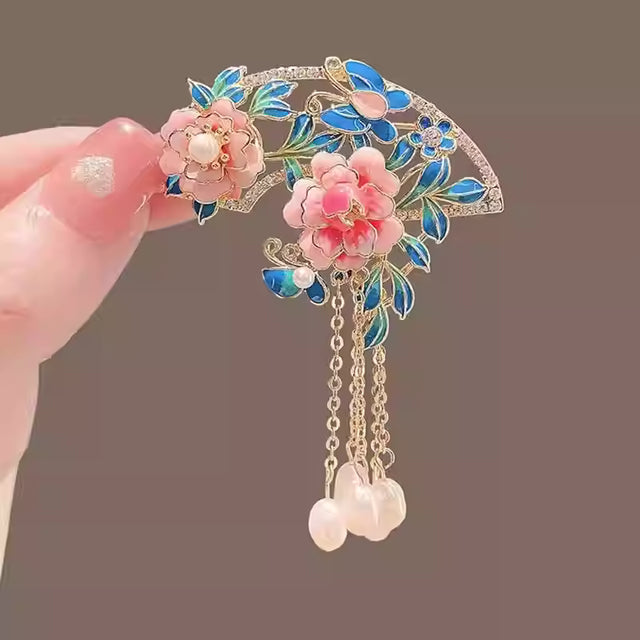
For contemporary jewelry, choose a design whose details you enjoy and whose dimensions fit how you intend to wear it. A dragon-and-pearl piece connects with the broader composition discussed above. Materials and construction should be assessed from the individual listing, alongside the motif's cultural appeal.
The Chinese Showcase Edit
The Pearl, Made Wearable
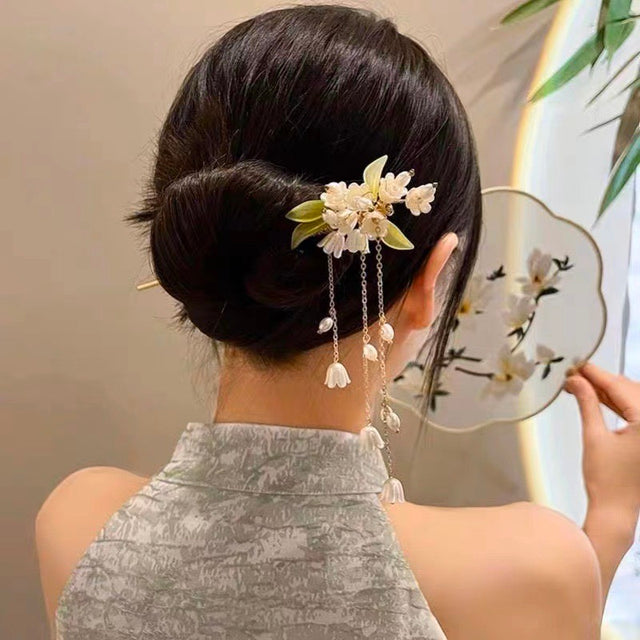
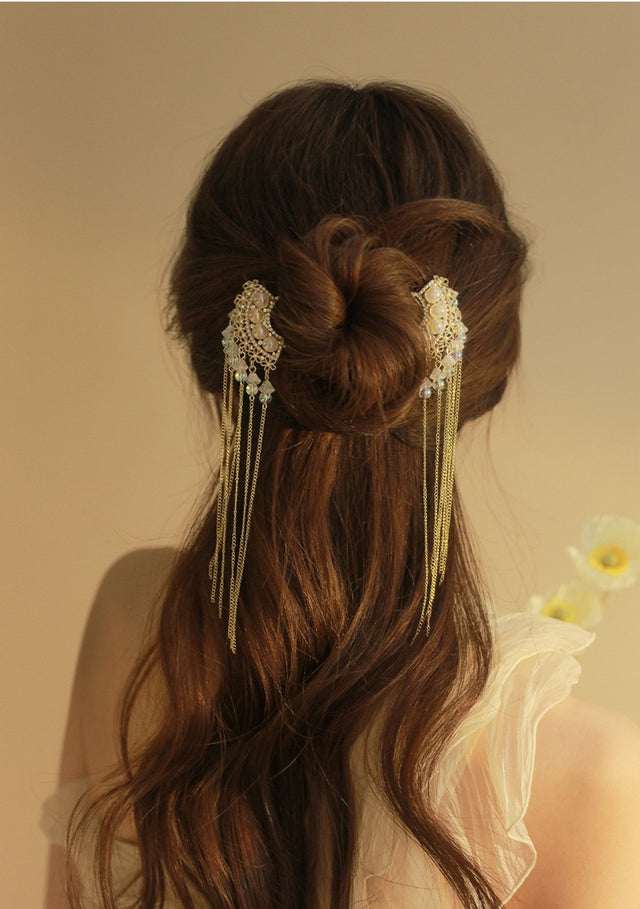
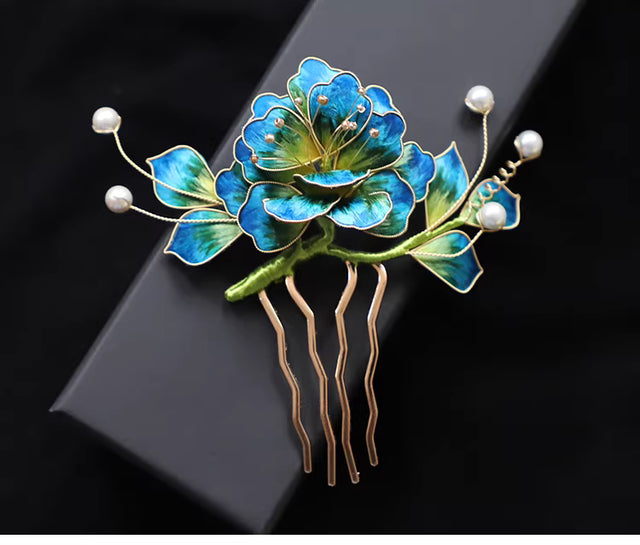
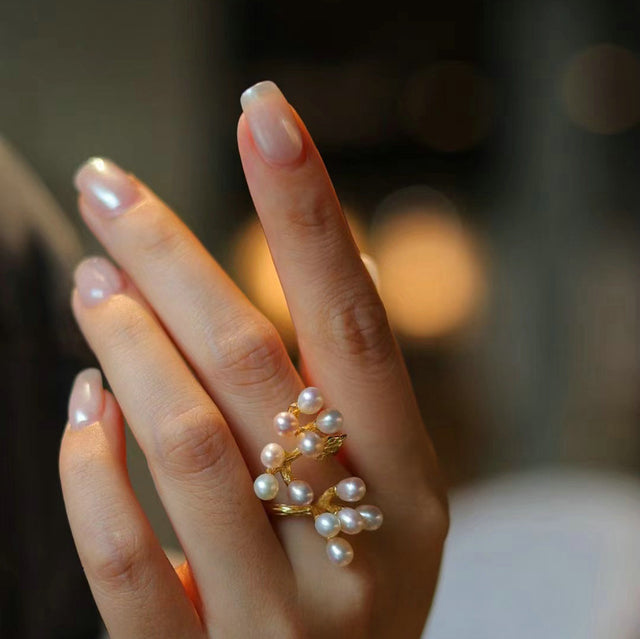
Explore three jewelry designs connected with the wider dragon-and-pearl tradition, selected for their visible details.


Product pages provide current specifications, options, and availability.
Frequently Asked Questions
What is the meaning of the flaming pearl in Chinese art?
A flaming pearl is a radiant jewel motif associated with preciousness and auspicious wishes. Buddhist, dragon, and folk-art settings can add different meanings, so the object and its context should guide interpretation.
What is huozhu?
Huozhu is a Chinese name commonly translated as fire pearl or flaming pearl. The motif generally combines a rounded jewel with pointed or curling flames.
Is a flaming pearl the same as a Buddhist wish-fulfilling jewel?
Some flaming jewels represent the Buddhist cintamani, or wish-fulfilling jewel. A flame-ringed orb alone is not enough to identify every decorative example as that specific religious symbol.
Why are two dragons shown with a pearl?
The central pearl connects the dragons visually and gives their movement a focus. Historical court objects and temple-roof ornaments provide documented examples, with interpretations shaped by their different settings.
Is the flaming pearl the same as the embroidered ball?
They are distinct decorative subjects. A flaming pearl emphasizes a jewel and flames; an embroidered ball suggests a decorated textile ball, often in lion-play scenes. Read more in our guide to the embroidered-ball pattern.
Does a flaming pearl have to be red?
No. The supplied examples include red, blue, and black-and-white treatments. The jewel-and-flame structure identifies the motif more reliably than one particular color.
What does flaming-pearl jewelry express?
It can express an appreciation of radiant imagery, Chinese ornament, or dragon-and-pearl designs. A wearer may also give it a personal meaning connected with hope or a bright future.
A Small Image of Enduring Light
The flaming pearl joins a rounded treasure with the restless movement of flame. It can stand alone, crown a religious object, or gather a pair of dragons around a luminous center. Recognizing those different settings makes the motif richer and easier to understand.
Its lasting appeal also lies in a simple experience: light helps us see and gives a dark space warmth. Artists turn that experience into curves, spirals, and flame tips, allowing a compact ornament to carry a generous wish for brightness.
References
- Nanjing University, ZHI digital heritage platform. Imperial Imagery: Dragon and Flaming-Pearl Motifs. Structural features and decorative media.
- Priscilla P. Soucek, Encyclopaedia Iranica. Cintamani. Jewel forms and Buddhist iconographic connections.
- The Palace Museum, Beijing. Jade Chime with Figures and Dragon Decoration, collection number Gu 00102413, mid-Ming dynasty. Double dragons with a flaming pearl.
- Tokyo National Museum. Buddhist Reliquary with a Flaming Jewel, E-15502, Kamakura period, thirteenth-fourteenth century. A comparative Japanese Buddhist object.
- Taiwan Historica, Dictionary of Taiwanese Folk Objects. Two Dragons Contending for a Pearl, entry 1713. Temple-roof placement and local beliefs.
- Pattern-book page and three additional illustrations supplied for this guide. Images were digitally cleaned or reconstructed at higher resolution; visual analysis refers to these illustrations rather than authenticated historical objects.
Stories, symbols and everyday objects
Our journal explores Chinese culture and design. Traditions and interpretations vary by region and source. For a purchase, use the specifications on the individual product page.
About Chinese ShowcaseQuestions or corrections? Contact us ↗